

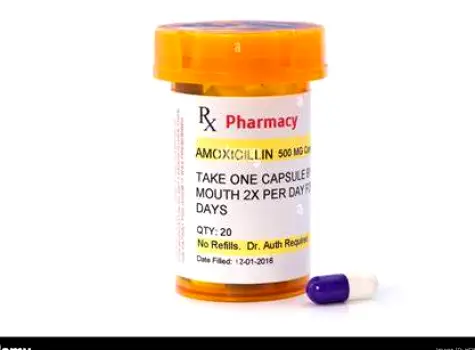
 h2>The short answer: typical adult amoxicillin doses
US prescribing information lists distinct adult dosing schedules for amoxicillin depending on the severity of the ear, nose, and throat infection. These schedules serve as reference ranges; they do not constitute a personal prescription or a recommendation to self-treat. The label distinguishes between mild-to-moderate infections and severe infections, assigning specific milligram amounts and administration frequencies to each category.
For adults with mild-to-moderate infections of the ear, nose, or throat caused by susceptible bacteria, the standard label options are either 500 mg every 12 hours or 250 mg every 8 hours.
For adults with severe infections of the ear, nose, or throat, the label lists higher-strength options: either 875 mg every 12 hours or 500 mg every 8 hours.
| Infection Severity | Dose Option 1 | Dose Option 2 |
|---|---|---|
| Mild-to-moderate | 500 mg every 12 hours | 250 mg every 8 hours |
| Severe | 875 mg every 12 hours | 500 mg every 8 hours |
These schedules apply only to infections caused by susceptible beta-lactamase-negative isolates of specified bacteria. Amoxicillin does not treat viral infections or noninfected middle-ear fluid. Because the label presents two frequency options for each severity level-twice daily and three times daily-it can appear that 500 mg belongs to either regimen. This is correct: 500 mg may be prescribed every 12 hours for mild cases or every 8 hours for severe cases. The same 500 mg capsule strength is used in both instances, but the total daily dose and administration interval change based on the infection's severity and the clinician's judgment.
A table of label alternatives is not sufficient to diagnose an ear infection or select a personal dose. Determining the correct strength and frequency requires a clinical assessment of the infection type, patient history, and kidney function. Readers should follow the individual prescription label provided by their healthcare provider rather than choosing a schedule from these reference ranges.
Confirming the type of ear infection
When people search for amoxicillin dosing for an ear infection, they are typically referring to acute otitis media, a bacterial infection of the middle ear. Ear pain and discomfort can arise from multiple causes that do not require, and will not respond to, antibacterial therapy. Because amoxicillin is designed to treat bacterial infections caused by susceptible organisms, it is ineffective against viral illnesses or noninfected fluid in the middle ear. Prescribing information specifies that antibacterial therapy should be used only when a bacterial infection is proven or strongly suspected to be caused by susceptible bacteria.
Ear pain alone is not a reliable indicator of a bacterial ear infection. Viral upper respiratory infections, such as the common cold or influenza, frequently cause ear pressure or discomfort without bacterial involvement. Middle-ear effusion-fluid remaining in the middle ear after a viral infection has resolved-is common and often painless or mildly uncomfortable, but it is not an active bacterial infection requiring antibiotics. Assuming amoxicillin is appropriate based solely on the location of pain can lead to unnecessary medication exposure.
A clinical examination is necessary to distinguish between these conditions. A healthcare provider evaluates the eardrum to check for bulging, redness, or fluid levels, which are signs consistent with acute bacterial otitis media. Without this assessment, it is impossible to determine whether an infection is bacterial and susceptible to amoxicillin. Confirming the type of ear infection through professional evaluation is a critical step before any dosing discussion becomes relevant. This ensures that the medication is reserved for cases where it is medically indicated, aligning with the principle that antibacterial therapy should target proven or strongly suspected susceptible bacterial causes.
How clinicians choose between dosing schedules
The selection of a specific amoxicillin schedule depends on a clinical evaluation of the infection's severity, the suspected bacterial cause, and the patient's individual health profile. While prescribing information provides defined ranges for mild-to-moderate and severe infections, the final prescription reflects the clinician's judgment based on these factors. Key considerations include the severity of symptoms, the likelihood of resistant organisms, recent antibiotic exposure, and the patient's medical history.
Infection severity is the primary driver for dose selection. Mild-to-moderate cases typically follow the lower-intensity schedules, while severe infections, characterized by high fever, significant pain, or systemic toxicity, often require the higher-intensity regimens. Clinicians also consider whether the infection is likely to be caused by beta-lactamase-producing bacteria. If there is concern for resistance, a different antibiotic class, such as amoxicillin-clavulanate, may be chosen instead of plain amoxicillin. These products are not interchangeable, and their doses cannot be converted directly. Plain amoxicillin remains the first-line choice for typical susceptible strains, but its use presupposes a bacterial infection that is proven or strongly suspected to be susceptible.
Allergy history is a critical safety filter. Amoxicillin is a beta-lactam antibiotic, and it is contraindicated in patients with a history of serious hypersensitivity reactions to amoxicillin, penicillins, or cephalosporins. Clinicians must verify this history before prescribing; a serious allergic reaction to these agents rules out amoxicillin use entirely.
Kidney function significantly impacts dosing safety and efficacy. Amoxicillin is cleared by the kidneys, so renal impairment requires adjustment. For adults with severe renal impairment, defined as a glomerular filtration rate below 30 mL/min, the standard 875 mg dose is not recommended due to the risk of accumulation. Longer intervals between doses are used for lower levels of kidney function. Clinicians must assess renal status to ensure the chosen schedule is safe, avoiding regimens that could lead to toxicity in patients with reduced clearance capacity.
How long treatment lasts and when improvement may occur
The US prescribing information provides severity-based dosing schedules for amoxicillin but does not establish one universal treatment duration specifically for every adult ear infection. Because clinical responses vary, the appropriate length of therapy depends on the specific infection and the patient's progress. The label indicates that duration must be determined by the prescribing clinician based on the diagnosis and expected recovery timeline, rather than following a fixed standard applicable to all cases.

Improvement in symptoms is a key indicator of how therapy is proceeding, but it does not dictate when to stop taking the medication. Patients should not discontinue amoxicillin, extend the course, or adjust the dose on their own because symptoms appear to improve or persist. Stopping antibiotics prematurely can lead to incomplete eradication of the bacteria and potential recurrence, while extending treatment unnecessarily increases the risk of side effects without providing additional benefit. Adherence to the prescribed duration is essential for ensuring the infection is fully resolved.
Monitoring for improvement involves observing the reduction of pain, fever, and other acute symptoms. The presence of lingering discomfort or the pace of recovery does not override the prescribed treatment plan. If symptoms do not improve as expected, or if they worsen, this suggests the need for clinical reassessment rather than self-adjustment of the regimen. The focus remains on completing the exact course provided by the healthcare provider, ensuring that the therapy aligns with the clinical judgment regarding the infection's severity and susceptibility.
How to take amoxicillin correctly
Amoxicillin should be taken exactly as prescribed, following the specific strength, dose, and frequency printed on the prescription label. While the label provides alternative schedules based on infection severity, the individual prescription reflects the clinician's judgment for that specific case. The two common regimens for adults are 500 mg every 12 hours or 500 mg every 8 hours. These intervals represent distinct dosing strategies; one is not simply a scaled version of the other. Maintaining consistent spacing between doses helps keep effective levels of the medication in the body. For example, a dose every 8 hours typically implies three times daily, while every 12 hours implies twice daily. Patients should use the exact formulation and strength dispensed by the pharmacy and should not substitute other strengths or formulations without consulting their prescriber or pharmacist.
Food does not interfere with the absorption of immediate-release amoxicillin capsules. Patients may take the medication with or without meals, based on personal preference or to minimize potential stomach upset. This flexibility can help with adherence, but it does not change the required frequency of administration. Taking the medication with food is not necessary for efficacy, nor is fasting required.
Take the medication for the full prescribed duration, regardless of how quickly symptoms improve. Stopping the course early, even if pain or fever resolves, can allow remaining bacteria to survive and potentially cause a recurrence of the infection or contribute to antibiotic resistance. Extending the treatment beyond the prescribed period does not improve outcomes and may increase the risk of adverse effects. Patients should not adjust their dose or schedule based on symptom changes or leftover prescriptions from previous illnesses. If there is any uncertainty about the instructions, such as how to space doses or whether a specific formulation is correct, the patient should contact their pharmacist or prescriber for clarification before continuing.
Missed doses, vomiting, and accidental extra doses
Managing missed doses, vomiting, and accidental overdoses requires careful adherence to safety guidelines to avoid underdosing or toxicity. Incorrect handling of these situations can compromise treatment efficacy or lead to adverse health outcomes.
Handling Missed Doses
If a dose is missed, it should be taken as soon as it is remembered, provided it is not almost time for the next scheduled dose. In that case, the missed dose should be skipped. Patients should never take a double dose to make up for a forgotten one. Taking extra medication to compensate for a missed dose increases the risk of side effects without improving therapeutic benefit.
Vomiting After a Dose
Vomiting shortly after taking amoxicillin complicates whether the full dose was absorbed. There is no universal rule for redosing in this situation because absorption depends on timing, gastric emptying, and individual physiology. Rather than guessing whether to take another dose, patients should contact their pharmacist, prescriber, or a poison control service for specific guidance. Self-correcting by adding doses based on uncertainty can lead to accidental overdose.
Accidental Extra Doses and Overdose
Accidental ingestion of extra doses or suspected overdose requires prompt professional guidance. Amoxicillin overdose has been associated with kidney injury, including crystalluria and renal failure. While many accidental extra doses may not cause immediate harm, symptoms such as severe nausea, vomiting, or changes in urine output warrant medical evaluation. In cases of significant overdose or severe symptoms, emergency care or immediate contact with a poison control center is necessary. Home dose correction or waiting for symptoms to appear without seeking advice is not recommended.
General Safety Principle
The core principle is to maintain the prescribed schedule without deviation. If uncertainty arises about whether a dose was taken, was vomited, or was missed, the safest course is to consult a healthcare professional rather than attempting to balance the dosing schedule independently. This approach minimizes the risk of toxicity and ensures that the treatment remains effective and safe.
Side effects and urgent warning signs
Amoxicillin is generally well-tolerated, but it can cause adverse reactions ranging from mild gastrointestinal discomfort to severe, life-threatening allergies. Recognizing the difference between common side effects and urgent warning signs is essential for safe use.
Common Adverse Effects
The most frequently reported side effects of amoxicillin are gastrointestinal. These include diarrhea, nausea, vomiting, and rash. Diarrhea is particularly common because antibiotics can disrupt the normal balance of bacteria in the gut. While mild diarrhea may resolve on its own, it should be monitored closely.

A mild skin rash, distinct from an allergic reaction, can also occur. Any new rash appearing during or after treatment should be evaluated by a healthcare provider to determine if it represents an allergic sensitivity or another type of reaction.
Serious Allergic Reactions
Serious and occasionally fatal hypersensitivity reactions, including anaphylaxis, have been reported with penicillin and cephalosporin therapy. These reactions can occur even in patients with no known history of allergy.
Signs of a severe allergic reaction include:
- Hives or widespread itching
- Swelling of the face, lips, tongue, or throat
- Difficulty breathing, wheezing, or tightness in the chest
- Dizziness or lightheadedness
If any of these symptoms occur, the medication should be discontinued immediately, and emergency medical treatment must be sought. Patients with a known history of serious hypersensitivity to amoxicillin, penicillins, or other beta-lactam antibiotics should not take this medication.
Antibiotic-Associated Colitis
Amoxicillin use is associated with Clostridioides difficile-associated diarrhea (CDAD), which can range from mild diarrhea to fatal colitis. This condition is caused by an overgrowth of C. difficile bacteria, which produce toxins that damage the colon lining.
CDAD should be considered in any patient who develops diarrhea during or after antibiotic therapy. Warning signs include:
- Watery or bloody stools
- Severe abdominal cramping or pain
- Fever
It is important not to assume that diarrhea is a benign side effect. Patients should not use anti-diarrheal medications or opioids to treat this type of diarrhea without consulting a doctor, as these can worsen the condition. Medical assessment is required to diagnose CDAD and initiate appropriate treatment, which may involve discontinuing amoxicillin and starting specific antibiotics or supportive care.
When to Seek Help
Patients should contact their healthcare provider if they experience persistent or severe gastrointestinal symptoms, a new rash, or any signs of allergic reaction. Urgent or emergency care is necessary for breathing difficulties, swelling of the throat or face, or severe abdominal pain with bloody diarrhea.
When the prescription or diagnosis needs reassessment
Treatment failure or clinical deterioration signals that the current management strategy requires reevaluation. Patients should not attempt to adjust the regimen independently if symptoms worsen, fail to improve as expected, or recur after initial relief. Self-modification, such as increasing the dose, extending the treatment duration, or adding leftover antibiotics, is unsafe and ineffective. These actions do not address the underlying cause of the lack of response and may increase the risk of adverse effects or antibiotic resistance.
Amoxicillin is effective only against susceptible bacterial infections. If the initial diagnosis was incorrect, or if the causative organism is resistant or beta-lactamase-producing, the medication will not resolve the infection. Viral ear infections and noninfected middle-ear fluid will not respond to antibacterial therapy. In such cases, the symptoms may persist or evolve, necessitating a different clinical approach. If the patient has severe renal impairment, the standard dosing schedule may be inappropriate, potentially leading to subtherapeutic levels or toxicity, which requires professional adjustment rather than patient-driven changes.
Switching to alternative antibiotics, such as amoxicillin-clavulanate, should only occur under direct clinical direction. These products are not interchangeable with plain amoxicillin, and their dosing protocols differ significantly. Patients should not self-switch medications based on the perception that the current treatment is “too weak” or “not working.”
Reassessment is necessary in the following scenarios:
- Symptoms worsen or new systemic symptoms (such as high fever or severe headache) develop.
- There is no improvement after 48 to 72 hours of appropriate therapy, as defined by the prescriber.
- Symptoms recur after a period of initial improvement.
- Severe side effects, such as significant rash or diarrhea, occur.
Before seeking reassessment, patients should confirm key details of their prescription to ensure accurate reporting. This includes the specific diagnosis, the strength of the medication, the amount per dose, the frequency of administration, and the intended duration. Patients should also be prepared to discuss their allergy history and any known kidney disease, as these factors heavily influence the clinician's ability to provide appropriate next steps. Clear communication with the prescriber or pharmacist ensures that any changes to the treatment plan are based on a comprehensive understanding of the patient's clinical status.